 Nov
09
Load Restraint Inspection Checklist: When to Replace Ratchet Straps, Chain and Binders
- 09/11/2026
- 0 Comment(s)
Every driver knows the feeling: it’s 5am, the load’s on, and that ratchet strap has a bit of fraying near the hook. Surely, it’ll be fine for one more trip?
It won’t be. A damaged restraint doesn’t fail gradually. It fails suddenly, usually when the load is under the most stress. And under Australia’s Chain of Responsibility laws, using worn or damaged gear puts the driver, the operator and the business at risk of fines and, far worse, a load on the road.
The good news is that spotting a restraint that’s reached the end of its life isn’t complicated. This guide gives you a practical checklist for ratchet straps, transport chain, load binders and fittings, plus the golden rule that settles every borderline call.
The Golden Rule: Inspect Before Every Use
Load restraint equipment should be checked before every single trip, not just at a scheduled service. The National Transport Commission’s Load Restraint Guide stresses inspecting gear before each use and replacing anything showing wear or damage. A 60-second visual and hands-on check is the cheapest insurance in your business.
And if you’re unsure whether something is still good? If in doubt, throw it out. A replacement strap costs a fraction of a damaged load, a defect notice or an incident.
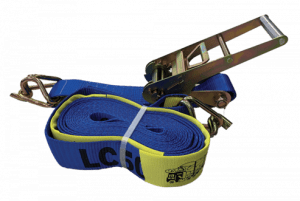
Ratchet Straps and Webbing: Retire If You See Any of These
Webbing does its job through every fibre working together, so even damage that looks minor can cut strength dramatically. Run the full length of the strap through your hands and look for:
- Cuts, nicks or tears, especially along the edges.
- Fraying or surface abrasion, particularly where the strap has rubbed on a sharp edge or corner
- Burns, melting or chemical damage, including glazed, stiff or discoloured sections (oil, battery acid and solvents are common culprits)
- Broken or pulled stitching in the load-carrying stitch pattern
- UV damage, where webbing looks faded, chalky or brittle after long exposure to sun
- Missing or unreadable label. If you can’t confirm the Lashing Capacity (LC), you can’t prove the strap is fit for the load
- Damaged hardware, such as bent hooks, a bent or cracked ratchet frame, a seized pawl, or a ratchet that no longer locks smoothly
Never repair a damaged strap yourself. Webbing assemblies should only be repaired by the manufacturer. Straps that no longer meet Australian standard AS/NZS 4380 should be withdrawn from service and discarded rather than repaired if safety limits are compromised.
Transport Chain: Retire If You See Any of These
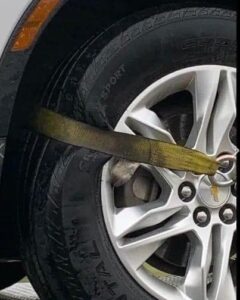
Chain is tough, but it isn’t indestructible. Check each link as you run the chain through your hands:
- Cracked links or cracks around welds
- Bent, twisted, stretched or elongated links. A link that looks longer or distorted compared with its neighbours has been overloaded
- Gouges, nicks or pitting that reduce the link diameter. A common rule of thumb is to replace the chain when wear or damage reaches about 10% of the original link diameter
- Heavy corrosion or rust pitting
- Knots, which should never be used to shorten or join chain
- Makeshift repairs. Only use repair links designed for the purpose, never bolts, wire or non-rated links
- Worn or damaged end fittings, such as hooks with a stretched throat opening, cracks or deformation
If your transport chain has been shock-loaded, dropped under tension or run over, treat it with suspicion even if it looks fine.
Load Binders: Retire If You See Any of These
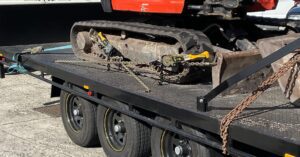
Binders (ratchet and lever types) are the tensioning heart of a chain assembly, and they take a beating. Check for:
- Bent or distorted handles
- Cracked frames or bodies
- Stretched, bent or worn hooks
- Seized, damaged or slipping ratchet mechanisms
- Worn threads or damaged pins
- Heavy rust or lack of lubrication that stops the binder moving freely
Need a Replacement? We’ve Got You Covered
Retiring a worn restraint is only half the job. The other half is replacing it with the right gear for your load. Browse our ratchet straps and assemblies, webbing and hardware and transport chain, binders and fittings, or talk to us about custom webbing straps or a custom-built assembly if your fleet needs a specific length or fitting.
Questions about whether a piece of gear is still fit for service?
Contact our team today, and we’ll point you in the right direction.